
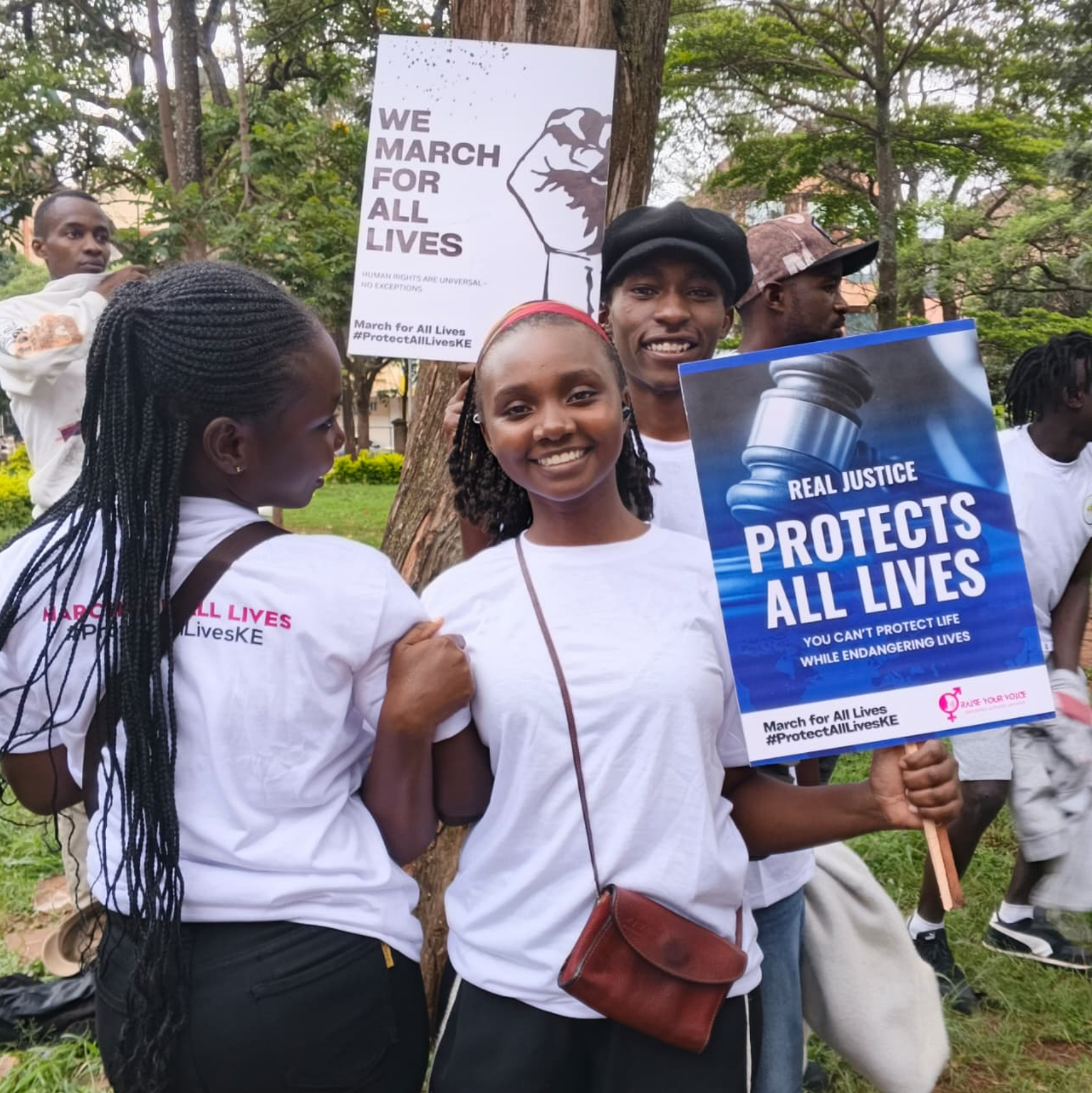
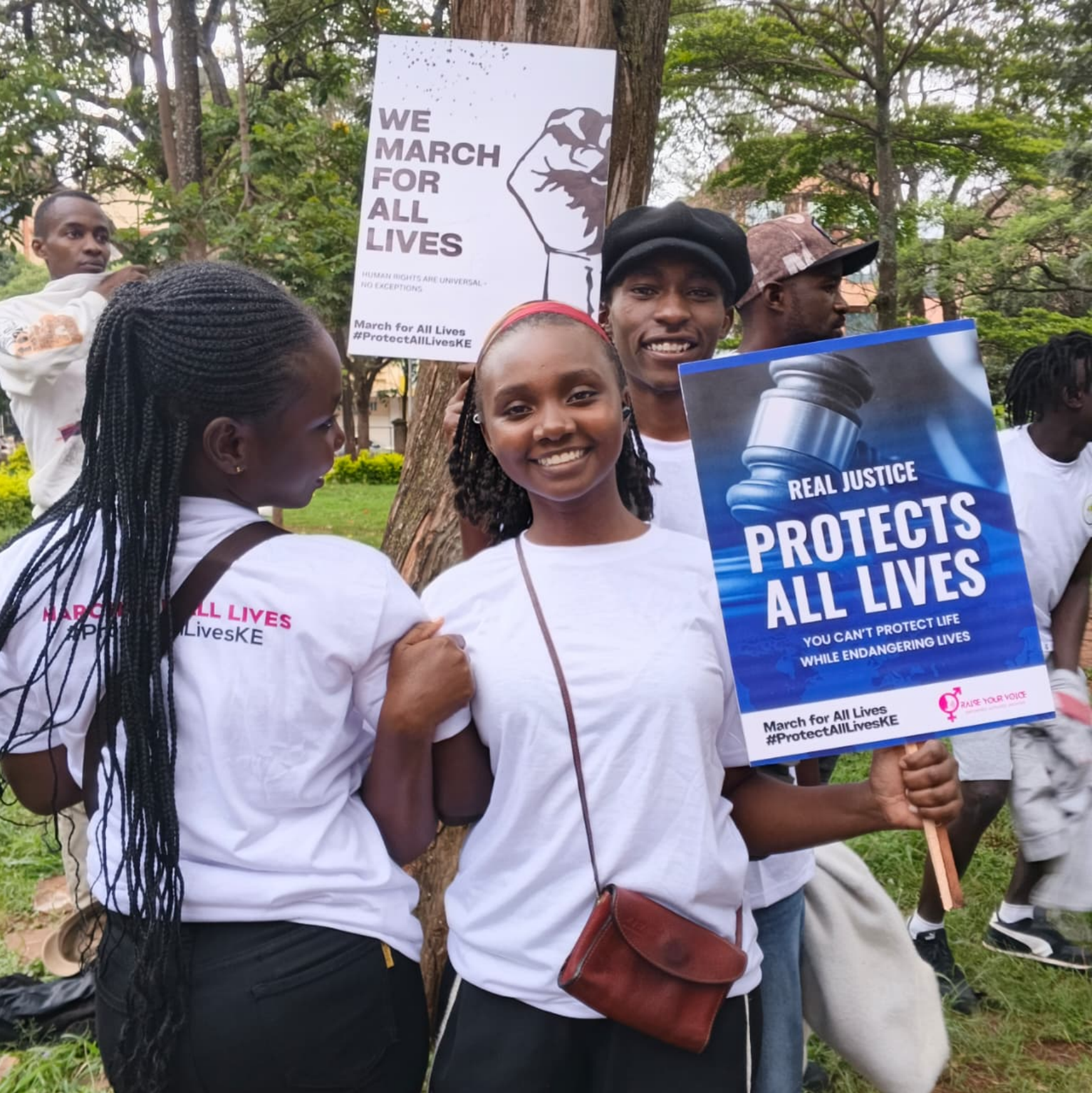
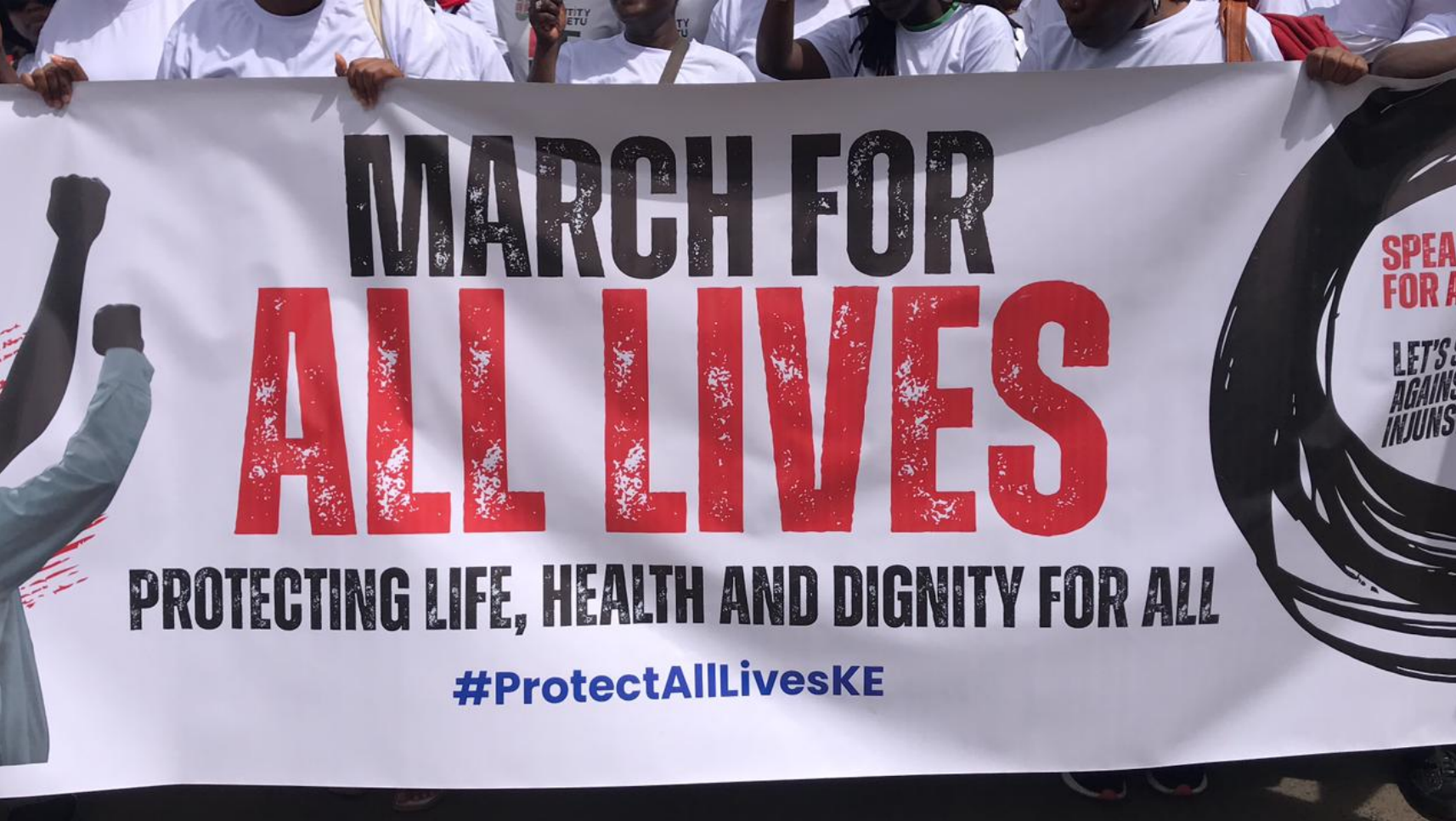
On March 27, 2026, hundreds of young activists and community advocates marched through Nairobi’s central business district in a peaceful protest calling for broader recognition of human rights, gender justice, healthcare equity, and protection for marginalized communities.
The demonstration, organized by the civil society group Raise Your Voice in collaboration with advocacy partners, was framed as a response to what we described as “selective concern” over whose lives are publicly defended and mourned in Kenya. The march sought to expand public conversations around the “right to life” beyond abortion debates to include victims of femicide, police brutality, hate crimes, healthcare failures, and systemic inequality.
The protest, dubbed the “March for All Lives,” reached an estimated 500,000 people through both street mobilization and digital awareness campaigns. More than 150 community members reportedly participated directly in advocacy activities linked to the event.
In the press statement, protesters criticized what they described as narrow interpretations of the “right to life,” arguing that public outrage in Kenya is often inconsistent, depending on the identities of victims. The statement highlighted recent deaths linked to floods, femicide, police violence, and discrimination against queer people and sex workers.
“We refuse a hierarchy of human worth where some deaths are politicized and amplified, while others are ignored,” the statement read.
Young people stressed that the demonstration was peaceful and non-partisan. They said extensive coordination with police and security agencies was essential in ensuring the event proceeded without violence. According to the report, officers from Central Police Station and regional security offices supported logistical planning and crowd safety measures.
The young people also noted that the protest aimed to sustain public engagement around sexual and reproductive health rights in Kenya, where abortion remains legally restricted except under specific constitutional provisions related to the life or health of the mother.
Media outlets, including The Star, Capital FM, People Daily, Radio Jambo, Ghetto Radio, and Radio France Internationale, reportedly covered the event and its accompanying press statement.
Young people described the march as evidence that public advocacy can remain effective even on politically sensitive issues, provided demonstrations remain focused, lawful, and strategically organized.